Duodenal adenoma in FAP

Q) What is the Surgery in FAP patient after colectomy for ampullary adenoma Stage IV

a)Classic Whipple
b) Pancreas preserving duodenectomy
c) Transduodenal excision
d) endoscopic excision


Answer is free for all

b) 

Duodenal cancers are the third most common (10%) cause of death in FAP after CRC and desmoid disease.

Duodenal adenomas  100% incidence

 tendency to progress to cancer.

The severity of duodenal adenomatosis predicts the chances of duodenal cancer,  Spigelman staging system that is based on

adenoma number, size, and histology

Patients with stage 0 disease (no adenomas) can be surveyed again in 5 years.

Stage I patients can be surveyed in 3 years;

stage II in 1 year;

stage III in 6 months

and stage IV is an indication to consider surgery. 36 % progress to cancer- Surgery is pancreas preserving duodenectomy

A Whipple is indicated for a duodenal cancer that is definitively operable

Duodenal adenomas can be treated by snare polypectomy or by transduodenal polypectomy. Ampullary adenomas can be treated by endoscopic mucosal resection or surgical ampullectomy

Ref schakelford page 1968

Polyposis syndrome

Q) Polyposis associated with least risk of colon cancer
a) Familial juvenile polyposis
b) Peutz Jeghers syndrome
c) Cowden syndrome
d) Cronkite Canada syndrome

Ans visible for premium members


Risk factors for Ca gall bladder

Q) Risk factor for CA GB are all except
A. Multiple polyp
B large gall stone >3 cm
C PSC
D pigment stone same risk as cholesterol stone

Ans visible for premium members


MCN

MCQ on Mucinous Cystic Neoplasm (MCN) of Pancreas

Q: All about MCN of pancreas are true except?

# Theme Pancreas MCQ

1. Presence of eggshell calcification in CT is suggestive of malignancy
2. Cyst fluid analysis can diagnose accurately in 80%
3. Invasive MCN is very aggressive with 30% 5YR Survival compared to adeno carcinoma
4. If MCN is non invasive, surgery is curative
🔒 Premium Members Only — Login to View Answer & Explanation
🚫 This answer is available only to Premium Members. Join Premium Surgery Course to access detailed explanations.

GIST

Q) True statement regarding GIST is  (AIIMS 2019)

a) 80% of GIST arise from stomach

b) ILeal GIST is resistant to Imatinab

c) Leiomyosarcomas do not express CD 117

d) Prognosis of GIST does not depend on the site of lesion 

Answer is in the button below and can be seen only when you are a premium member and logged in

[


c
 They can appear anywhere within the GI tract, although they are usually found in the stomach (40% to 60%), small intestine (30%), and colon (15%).
 Development of imatinib mesylate has significantly altered previous treatment strategies. Imatinib mesylate is a tyrosine kinase inhibitor that blocks the unregulated mutant c-kit tyrosine kinase and inhibits the BCR-ABL and PDGF tyrosine kinases.
Current guidelines suggest that patients with high-risk disease should receive 3 years of adjuvant  therapy at all sites
Sabiston page 1280
Ileal GIST are more malignant than stomach GIST

Leiomyosarcomas

Among the gastric tumors, there were no examples of true leiomyosarcomas, whereas there were four small intestinal, four colonic, and two rectal tumors that histologically showed features of differentiated smooth muscle cells with blunt-ended nuclei and eosinophilic, sometimes granular, cytoplasm. These tumors were, by definition, all positive for SMA, and seven also were positive for desmin. Although all leiomyosarcomas were generally negative for CD117, scattered large neoplastic spindle cells (less than 1% of tumor cells) in two intestinal leiomyosarcomas showed strong cytoplasmic positivity; these four tumors were negative for CD34.

Ref https://www.nature.com/articles/3880210

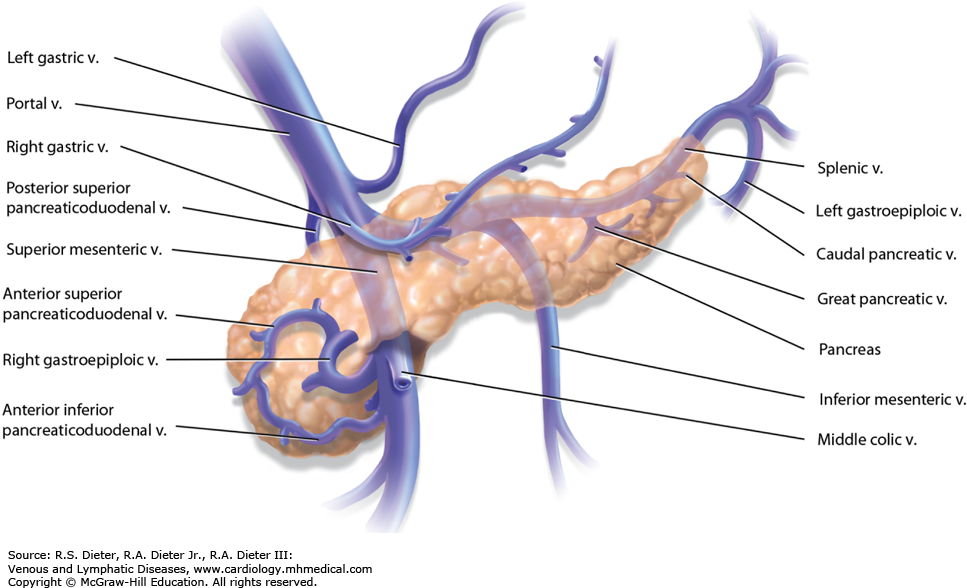
Right gastroepiploic vein

Q) Right gastroepiploic vein drains into
A. Splenic vein
B. Left gastric vein
C. Portal vein
D. Superior mesenteric vein


ANswer is free

D

SMV

Veins of SMV
Right gastro epiploic vein

The right gastroepiploic vein is a significant blood vessel located in the abdomen. It runs parallel to the right gastroepiploic artery and is an essential part of the venous drainage system of the stomach.

Originating from the greater curvature of the stomach, this vein receives blood from various branches, including the short gastric veins. As it continues its course, it eventually joins with the superior mesenteric vein, contributing to the portal venous system. Understanding the anatomy and function of the right gastroepiploic vein is crucial for medical professionals in diagnosing and treating related conditions, ensuring proper circulation and overall digestive health.

The right gastroepiploic vein is essential in many surgical procedures:

  • Gastric Bypass and Gastric Cancer Surgery: The RGEV may require ligation or resection in gastrectomy procedures. Surgeons should be cautious of potential bleeding risks and the implications for vascular flow.
  • Coronary Artery Bypass Grafting (CABG): Surgeons often use the right gastroepiploic artery as a graft, though the associated vein is also considered during CABG preparation due to its proximity and importance.
  • Trauma and Emergency Surgery: Understanding Right gastroepiploic vein anatomy aids in identifying bleeding sources, especially in abdominal injuries.

Questions on Liver 

Surgery Anatomy

Pseudoachalasia

Q) Most common cause of  pseudoachalasia is ?

(a) Benign tumors of esophagus

(b) Chagas disease

(c) Caustic injury

(d) Adenocarcinoma of cardia


d

Pseudoachalasia is an achalasia-like disorder that is usually produced by adenocarcinoma of the cardia

Other uncommon causes are

 1.benign tumours at this level.

2, Tumors of bronchus, pancreas

It  is a condition that mimics the symptoms of achalasia, but is caused by a different underlying problem. The most common cause  is  malignancy in the gastroesophageal junction (GEJ), which is the area where the esophagus meets the stomach. Other possible causes of pseudoachalasia include:

  • Esophageal stricture
  • Chagas disease
  • Radiation therapy to the chest
  • Aortic aneurysm
  • Thyroid cancer

Pseudoachalasia presents in an identical manner to idiopathic achalasia with progressive dysphagia to solids and liquids, retrosternal pain, regurgitation of undigested foods and weight loss.

The main difference between pseudoachalasia and achalasia is that it  is often associated with other symptoms, such as abdominal pain, vomiting, and weight loss.

The diagnosis is made through a combination of clinical evaluation, upper endoscopy, and esophageal manometry. Upper endoscopy can help to rule out a malignancy in the GEJ, and esophageal manometry can help to confirm the diagnosis of achalasia. In some cases, a CT scan or MRI of the chest may be needed to further evaluate the cause of pseudoachalasia.

Pseudoachalasia

Questions MCQs on Esophagus 

Case report