Q) Risk factor for developing melanoma in a pigmented skin lesion is ?
a) Haemangioma
b) Lentigo maligna
c) Congenital nevocellular nevi
d) Tophi
6000+ High-Yield MCQs & Explanations – NEET SS MCH
 admin
admin Q) Risk factor for developing melanoma in a pigmented skin lesion is ?
a) Haemangioma
b) Lentigo maligna
c) Congenital nevocellular nevi
d) Tophi
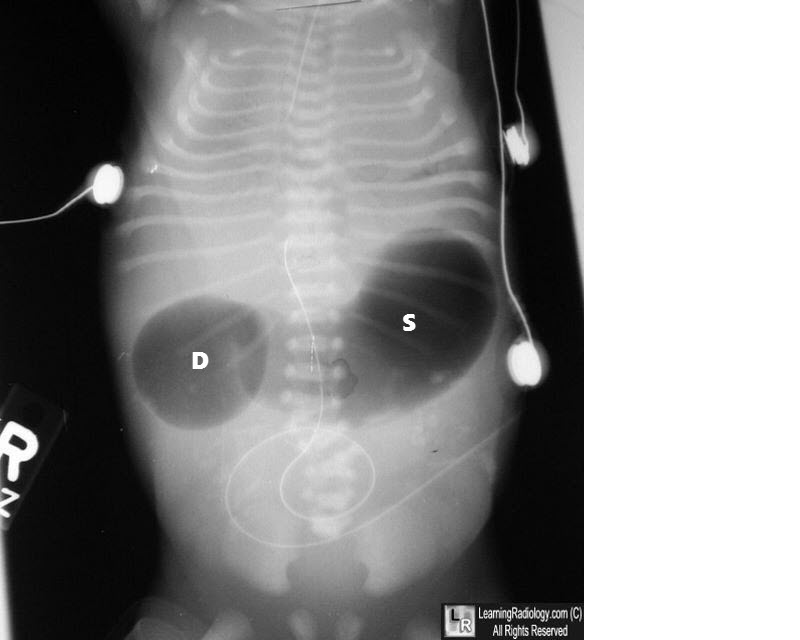
Q) An infant presents with duodenal atresia. Which of the following is true about this condition?
a) It is the most common GI atresia
b) It presents soon after birth with non bilious vomiting
c) Pre natal detection of duodenal atresia is common
d) Gastro jejunostomy is the procedure of choice to bypass the obstruction
Understanding Duodenal Atresia in Infants: Key Facts and Diagnostic Insights
Duodenal atresia is a congenital condition that affects newborns, impacting their gastrointestinal (GI) system. While not the most common form of GI atresia, it is a significant condition that requires early detection and treatment. This article delves into the critical aspects of duodenal atresia, including its symptoms, diagnosis, and treatment options.
Duodenal atresia is a congenital obstruction of the duodenum, the first part of the small intestine. This condition occurs in approximately 1 in 5,000 live births and is associated with other congenital malformations, such as Down syndrome, prematurity, and biliary atresia.
Early Diagnosis through Ultrasound
One of the most notable aspects of duodenal atresia is that it is commonly detected during prenatal ultrasounds. Advances in antenatal sonography allow doctors to identify most cases before birth, providing an opportunity for early planning and intervention. The typical sign on ultrasound is a "double bubble" appearance, which indicates the presence of fluid-filled areas in both the stomach and duodenum.
Bilious Vomiting After Birth
Duodenal atresia typically presents soon after birth, with one of the hallmark symptoms being bilious vomiting. In around 80% of cases, the obstruction is located distal to the ampulla of Vater, allowing bile from the liver to mix with stomach contents, leading to greenish, bilious emesis.
Associated Congenital Conditions
Infants with duodenal atresia may also present with other congenital anomalies, such as Down syndrome, heart defects, or other gastrointestinal malformations like jejunoileal atresia, which is actually the most common type of GI atresia (occurring in 1 in 2,000 live births).
Stages of Duodenal Atresia
Duodenal atresia can occur in various forms, ranging from partial obstruction, such as duodenal webs, to complete separation of the duodenum. These different forms dictate the severity of symptoms and the urgency of intervention.
Double Bubble Sign on Imaging
Postnatally, duodenal atresia is diagnosed through abdominal imaging, with the "double bubble" sign being a classic radiographic finding. This sign appears as two distinct gas-filled bubbles—one in the stomach and one in the duodenum—indicating the obstruction.
Surgical Intervention
The treatment for duodenal atresia is surgical, with the goal of bypassing or removing the obstruction. Contrary to some misconceptions, gastrojejunostomy is not the preferred procedure. Instead, a duodenoduodenostomy is often performed to connect the two ends of the duodenum, allowing normal passage of food from the stomach to the intestines.
Post-Surgical Outlook
With early surgical intervention, the prognosis for infants with duodenal atresia is generally positive. Post-operative care is crucial to ensure proper digestion and prevent complications such as infection or malabsorption.
Q) In a 55 year old male with a bleeding peptic ulcer, endoscopy is done. Which of the following findings on endoscopy predicts the highest rate of re bleed?
a) Non bleeding vessel
b) Adherent clot
c) Flat pigmented spot
d) Clean base ulcer
Click here for more stomach MCQs
Free Answer
Answer a
a) Non bleeding vessel IIA - Out of the choices given
Bleeding peptic ulcer is mostly from the posterior surface of the lesion and can be sometimes lethal
Forrest classification is used to grade the risk of re bleeding in peptic ulcers.
According to the stigmata of recent bleed, the chances of re bleed increase.
Endoscopic appearance of bleeding peptic ulcer classification
Ia - Active Spurting Highest 90% chance of acute bleeding peptic ulcer ICD 10
Ib- Active oozing
IIa Non bleeding vessel 50% chance of re bleed
IIB Adherent clot
IIC Flat Pigmented spot
III Clean based ulcer
Sabiston 1154 21th edition
Q) How to treat a bleeding peptic ulcer? Bleeding gastric ulcer management?
Steps to manage a bleeding peptic ulcer
BEST TEXTBOOKS FOR GENERAL SURGERY
Bailey & Love’s Short Practice of Surgery, 27th Edition
Sabiston’s Textbook of Surgery
Schwartz’s Principles Of Surgery
Q) Which of the following statement is true regarding primary thyroid lymphoma?
a) Goiter grows at a slow pace
b) Hashimoto thyroiditis is a pre existing condition for thyroid lymphoma
c) "B" symptoms are common
d) MALT lymphoma is the commonest
Q) Which is a true statement regarding diagnosis of Meckel's diverticulum?
a) CT and Ultrasonography are the modality of choice
b) Technetium pertechnetate scan is the investigation of choice in children
c) Technetium Pertechnetate scan has more utility in adults
d) None of the above
Q)Splenic artery aneurysm is seen in
a) Proximal 1/3rd of splenic artery
b) Proximal 2/3 of splenic artery
c) Middle 1/3 of splenic artery
d) Distal 1/3 of splenic artery
Q) A 50 year old male undergoes pancreatectomy for Carcinoma head of pancreas. His pre op Hb was 9.2g% and during surgery he received 5 units of PRBC. In the post op period on the 2nd day he develops ECG changes. Work up is done for Myocardial Ischemia which is negative. What is the most common cause of ECG changes here
a) Hyponatremia
b) Hyperkalemia
Q)Which of the following is not associated with diverticulum in colon?
a) High fiber diet
b) High Intraluminal pressure
c) Disordered colon motility
d) Change in colon structure
Q) Regarding gastrinoma what is true? ( # Questions on Endocrine Surgery)
a) All gastrinomas express SRS receptors
b) In 30 % of cases gastrinomas are not localized intra operatively
c) Levels of serum gastrin more than 100pg/ml are strongly suggestive of gastrinoma
d) Angiography with secretin stimulation is required in all cases for localization of gastrinoma
Q) True about presentation of amoebic liver abscess?
a) 60-70% patients with amoebic liver abscess have diarrhoea
b) Jaundice is seen in 50% of these patients
c) Rupture of liver abscess in the peritoneum is seen in 10% cases
d) More complications of amoebic liver abscess occurs in acute presentation